





Here’s something a lot of business owners don’t want to hear: posting more often probably won’t fix your social media. If your posts get a few likes and no enquiries, the real problem is usually what you’re posting and who it’s for.
A clinic and a clothing store don’t have the same customers. So why do so many businesses post the same things? A festival greeting, an offer, a stock photo with the logo in the corner. People scroll right past that stuff.
Technically, it’s anything you put up on Instagram, Facebook, LinkedIn, YouTube, WhatsApp and so on. Photos, videos, carousels, polls, stories, a few lines of text. All of it counts.
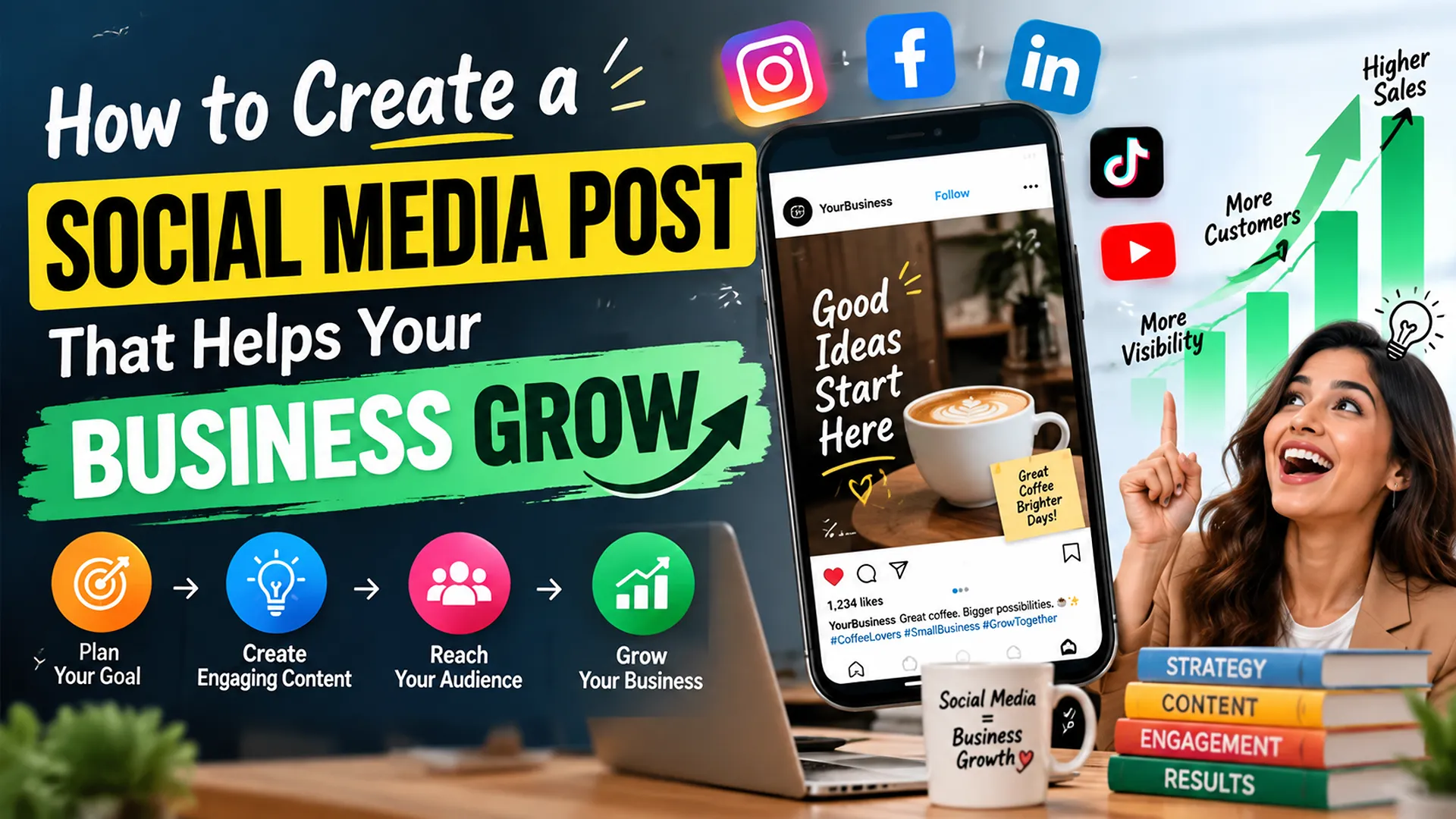
But for a business, I’d put it more simply. A social media post should get someone to notice you, trust you, talk to you, or get in touch. If it’s not doing any of that, it’s just filling space.
Please don’t try to be on every platform. You’ll burn out and the quality will drop. Two or three is plenty, as long as they’re the ones your customers actually use.
| Platform | Best for | Good post formats |
|---|---|---|
| Shops, food, salons, real estate | Reels, carousels | |
| A wide local audience | Photos, videos, offers | |
| B2B companies and professionals | Carousels, project updates, text posts | |
| YouTube Shorts | Getting found by new people | Demos, quick tips |
| WhatsApp Status / Channels | Existing customers | Offers, updates, new stock |
| Google Business Profile | People searching for you on Google or Maps | Offers, updates, events |
For local businesses in India, WhatsApp and Google Business Profile are easy to forget and hard to beat. Your customers are on WhatsApp all day anyway. And your Google profile shows up exactly when someone’s searching for what you sell. Personally, I’d keep that profile updated before I’d bother opening a third social account.
Each format has its strengths. Reels and short videos are usually your best shot at reaching people who’ve never heard of you. Carousels are great when you’ve got something to explain, and people save them to read later.
A simple image is enough for an offer or an announcement. Reviews and testimonials help when someone is almost ready to buy but wants a bit of reassurance. Behind-the-scenes posts remind people there are actual humans running the business. Polls get people commenting. Customer photos prove real people use your product. Live videos make sense when you’re launching something and expect lots of questions.
You don’t need every format every week. Just don’t let your feed turn into the same post over and over.
Someone nearby mostly wants to know what you do, roughly what it costs, and whether other people were happy. Before-and-after posts (with the customer’s permission) cover a lot of that. So do reviews turned into a quick graphic or clip, offers on WhatsApp Status and your Google profile, and daily specials or new arrivals.
Picture a salon posting a before-and-after video of a bridal look with one line underneath: “Wedding season bookings are open. Message us on WhatsApp.” That’s it. It shows the result and tells people exactly what to do.
B2B is slower. Buyers compare, check, ask around. Before they pick up the phone, they want some proof you can deliver.
What helps here is showing your work as it happens. Share project updates from start to finish, videos of your machines or products running, and your certifications explained in terms of what they mean for the buyer. Post finished projects too, if the client’s okay with it. LinkedIn carousels that explain technical details in plain language also work well.
A steel building manufacturer, for instance, could post a carousel showing each stage from order to handover. It saves the buyer a lot of questions, and it saves your sales team a lot of time.
Buyers want to see progress, and they want to imagine living there. Construction updates, walkthrough videos of sample flats, posts about nearby schools, hospitals and transport, and possession updates all help with that.
You’re selling know-how, so show some. Share results from past work (with permission), give away a small useful tip now and then, let people see how you work, and post short testimonials.
Product demos, customer photos, unboxing videos and festival or limited-time offers usually do most of the work.
Is it for reach? Trust? Comments? Enquiries? Choose one. Posts that try to do everything tend to land nowhere.
A factory owner isn’t excited about specs. They’re worried about whether the building will be ready on time and stay within budget. Talk about that first.
Video for reach, carousel for explaining, a plain image for an offer. Simple.
You’ve got a second or two before someone scrolls on, so the opening line has to earn the next one. Lines like “Tired of waiting months for your project?” or “Most shops make this mistake on Instagram” or “3 things to check before you buy” tend to work because they speak to a problem straight away.
If your customers are local, try a Gujarati, Hindi or Hinglish caption sometimes. It often feels warmer than formal English. On LinkedIn, keep it in simple English.
And end with a clear ask. “Message us on WhatsApp.” “Call for details.” “Save this for later.” People won’t guess what you want them to do.
Same colours, same fonts, every time, so people know it’s you before they read the name. Make sure the text is readable on a phone. Use the right size for each platform. That’s honestly most of it.
Showing up regularly matters more than finding the “best time to post.” Reply to comments and DMs quickly too. Someone asking a question is often close to buying, and if you reply two days later, they’ve probably gone elsewhere.
Once a month, check your reach, your saves and shares, and your enquiries. If you only have time for one, look at enquiries. A quiet post that brings two real leads is worth more to me than a viral one that brings none.
Let’s say a construction company wants enquiries from factory owners, mainly small and medium businesses that are planning to expand.
They open with: “Planning a new factory shed? Here’s what the process looks like.” The post is a 5-slide LinkedIn carousel with real site photos, one stage per slide, written in plain English. At the end: “Message us to discuss your project.”
After it’s up, they keep an eye on how many people see it, save it, and message them. If it brings in conversations, they make more like it. If not, they change the hook or the format and try again.
(Swap in a real post from your own work here if you can. Real numbers will always beat a made-up example.)
Festival posts usually do well. The trick is planning them early, not the night before.
| Festival | Usual timing | Post idea | Start posting |
|---|---|---|---|
| Uttarayan | January | Kite-themed offer or team photo | 1 week before |
| Holi | March | Colourful product or team post | 1 week before |
| Independence Day | 15 August | A “Made in India” story about your work | 3–5 days before |
| Raksha Bandhan | August | Gift ideas or combo offers | 2 weeks before |
| Navratri | September–October | Garba-themed posts or festive collections | 2–3 weeks before |
| Diwali | October–November | Festive offers or thank-you posts | 3–4 weeks before |
| New Year | January | Year-in-review or upcoming plans | 1 week before |
And please connect the festival to your business. “Celebrate this Diwali in your new home” from a builder will get far more attention than yet another “Happy Diwali” with a logo on it.
The most common one is a feed full of greetings and offers and nothing else. Why would anyone follow that?
A few others come up again and again. People forget to say what the reader should do next. They copy trends that have nothing to do with their customers. They leave comments and DMs unanswered, even though that’s often where the buyers are. They count likes instead of enquiries. And they paste the same post on every platform without changing a word.
There isn’t a perfect number. Three decent posts a week that you can keep up for months will do more than posting daily and giving up after two weeks.
Depends on your business. Short videos often reach more people, and helpful carousels get saved a lot. Your own numbers will tell you more than any rule.
Go with whatever your customers are most comfortable with. Local audiences often like Gujarati or Hinglish. B2B audiences usually expect English.
It varies quite a bit. The number of posts, which platforms you use, and whether you need video all affect the price.
Yes, especially on LinkedIn. It’s slower than retail, but regular project updates and useful posts build the trust a buyer needs before they call.
More posts won’t save a page that isn’t working. Better-matched posts will. Pick a few post types that suit your business, give each social media post one clear job, and keep checking which ones bring real enquiries. Then do more of those.